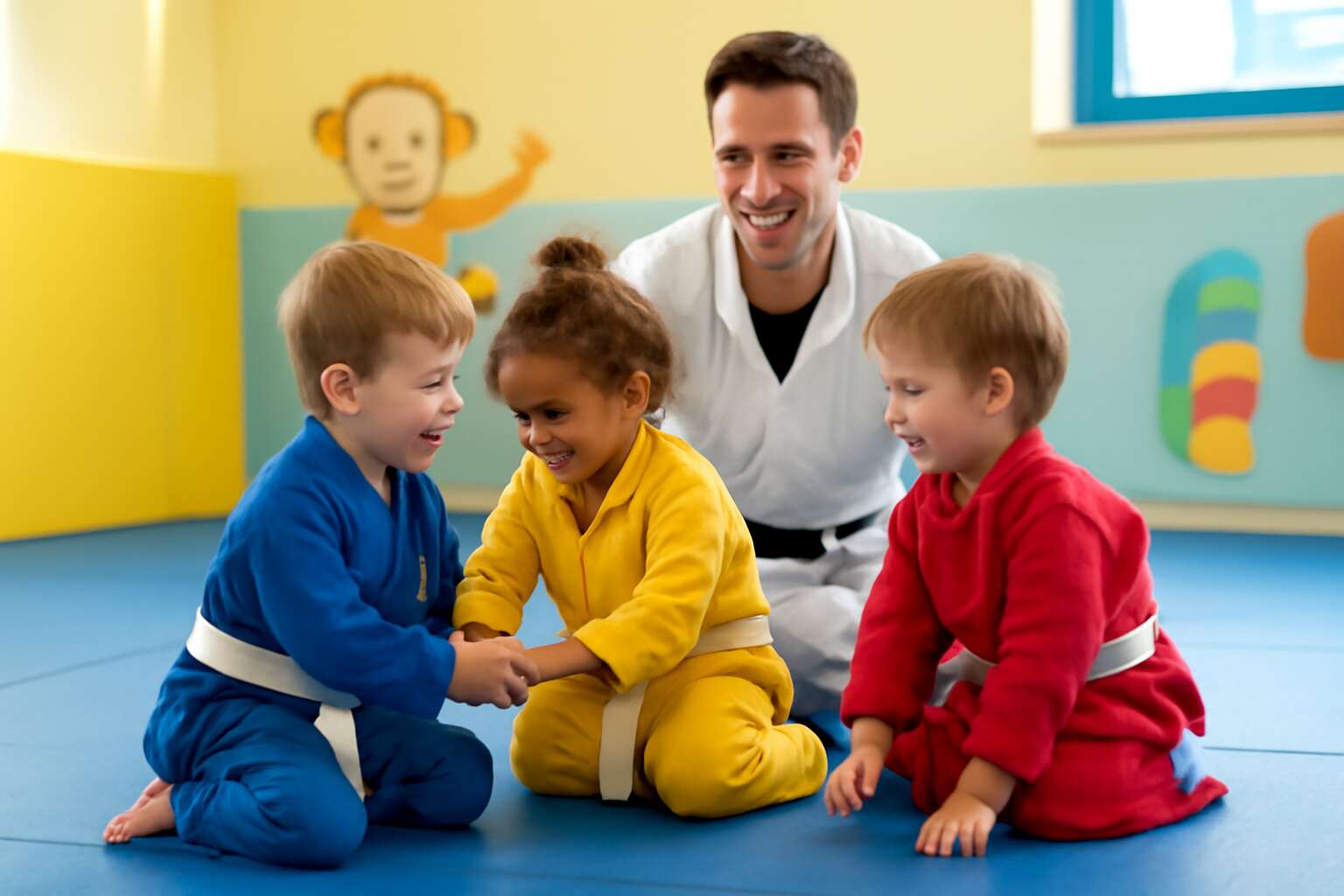
Overview and Benefits of BJJ for Toddlers
What is Brazilian Jiu Jitsu for toddlers?
A sunlit mat becomes a stage where tiny feet learn a language of balance and breath. brazilian jiu jitsu for 3 year olds is not about force; it’s about leverage, play, and focus flowing through fun. A seasoned SA coach mutters, “Small moves, big futures,” and the studio glows with nervous excitement and steady, wobbly confidence.
What is Brazilian Jiu Jitsu for toddlers? It is age-appropriate instruction that uses gentle games and safe grips to build coordination, body awareness, and self-control. Lessons are short, structured, and peppered with encouragement, making every tumble a lesson in resilience. In South Africa, families value mobility, discipline, and social connection that BJJ nurtures on and off the mat.
Benefits include:
- Improved balance and motor skills
- Enhanced focus and emotional regulation
- Early social confidence and turn-taking
Physical benefits for preschoolers
Tiny toes on a sunlit mat, a chorus of giggles and steady breaths—this is the rhythm of brazilian jiu jitsu for 3 year olds. In South Africa, studios tailor every session to short attention spans, weaving balance, safe grips, and playful cooperation into gentle, focused exploration. “Small moves, big futures” isn’t just a motto here; it’s the daily truth on the mat.
Overview and benefits stem from age-appropriate design—brief, structured activities that invite movement without force.
- Improved balance and core stability
- Enhanced coordination and spatial awareness
- Early motor planning and body control
For South African families, this approach translates into calmer mornings and confident toddlers on playgrounds as they grow through brazilian jiu jitsu for 3 year olds.
Cognitive and social benefits of BJJ for young children
Across South Africa, parents report calmer mornings and steadier attention after only weeks on the mat. brazilian jiu jitsu for 3 year olds thrives on design that respects tiny bodies: brief, structured activities inviting movement without force. The aim isn’t mastery but safe, curious steps—teaching balance, safe grips, and cooperative play in a gentle arc.
For toddlers, cognitive and social gains emerge from short, playful sequences. On the mat, little minds learn patterning, anticipate turns, and adapt to partners. Socially, they practice sharing space, taking turns, and communicating through breath and posture. Core benefits include:
- Patterning and memory via short sequences
- Turn-taking and cooperative problem solving
- Regulation of energy through breath control
These micro-skills blend with everyday routines, helping South African families see toddlers grow more confident on playgrounds and in classrooms.
Age-appropriate skill development in early martial arts
Tiny bodies, vast horizons: on the mat, wonder and discipline meet in their first brave steps. “Our youngest athletes learn to listen before they lunge,” a South African BJJ coach proclaims, and the studio hums with curious energy as tiny corners of the gym glow with focus.
For brazilian jiu jitsu for 3 year olds, programs emphasize safety, brief sequences, and gentle progression—teaching balance, safe grips, and cooperative play without force. The approach respects small frames, inviting movement through play and praise, not pressure.
- Spatial awareness grows as little feet learn to move with others
- Impulse control through breath and rhythm
- Cooperative problem-solving as tiny partners navigate turns
These elements weave into daily routines, helping toddlers stride into playgrounds and classrooms with a softer power and a fearless curiosity.
Common myths about martial arts for toddlers
“Movement is a toddler’s first language!” a South African BJJ coach says, and brazilian jiu jitsu for 3 year olds centers on safety, brief sequences, and playful progression. Tiny bodies learn to listen before they lunge, to balance, to grip safely, and to explore with wonder rather than force.
On the mat, spatial awareness grows as little feet learn to move with others. Impulse control comes from breath and rhythm, and cooperative problem-solving emerges as tiny partners navigate turns. This progression is designed for short attention spans and soft landings, so confidence travels beyond the gym into playgrounds too.
Common myths about martial arts for toddlers:
- It trains aggression and fights.
- It’s unsafe for tiny bodies.
- Toddlers can’t learn focus or teamwork.
- BJJ is only for older kids.
Safety, Structure, and Class Setup
Safety guidelines for toddlers in BJJ programs
Tiny toes, big curiosity, and mats that squeak with laughter—safety is the first rule of toddler BJJ. In brazilian jiu jitsu for 3 year olds, sessions run under vigilant eyes, padded floors, and gear-free zones that minimize snags. Nails trimmed, jewelry stowed, and a gentle warm-up keep little joints protected.
Structure matters when attention spans mimic butterfly wings. A predictable rhythm—warm-up, playful drill, partner practice, quick recap—lets toddlers bloom. In South Africa, coaches emphasize gentle progression and positive reinforcement, so growing focus follows fun rather than fear.
Class setup for toddlers should invite exploration without crowding. Equipment stays low, mats are clearly marked, and exits remain unobstructed. Demos happen at kid height; stations rotate so no one stands still too long.
- Soft, non-slip mats and padding
- Clear boundaries and open exits
- Age-appropriate drills and slow transitions
- On-site first aid and trained staff
Choosing the right curriculum and environment for preschoolers
Safety remains the quiet backbone of any successful toddler programme. Soft, non-slip mats cushion tiny steps, nails stay trimmed, and jewelry is stowed. A gear-free zone and immediate access to trained staff keep little explorations calm, controlled, and free from unnecessary snags.
Structure matters when attention spans flutter like butterfly wings. A predictable rhythm—warm-up, playful drill, partner practice, quick recap—lets toddlers bloom. When it comes to brazilian jiu jitsu for 3 year olds, South Africa’s coaches emphasise gentle progression and positive reinforcement, guiding growth with curiosity rather than fear.
Class setups invite exploration without crowding. Equipment stays low; mats are clearly marked; exits remain unobstructed. Demos happen at kid height; stations rotate so no one stands still too long. The curriculum should feel like a story told in moves, not a ladder climbed with tension.
- Soft, non-slip mats and padding
- Clear boundaries and open exits
- Age-appropriate drills and slow transitions
- On-site first aid and trained staff
Injury prevention and warm-up basics for toddler classes
Brave little hearts meet a sea of safety, where tiny feet tread with care. In South Africa, safety is the backbone of toddler sessions—soft, non-slip mats cushion steps, nails stay trimmed, and jewelry is stowed. On-site first aid and trained staff stand ready.
When it comes to brazilian jiu jitsu for 3 year olds, structure matters; coaches favour gentle progression and cheerful reinforcement, guiding growth with curiosity rather than pressure. A predictable rhythm—warm-up, playful drill, partner practice, quick recap—lets tiny minds bloom and bodies find their balance.
Class setup supports injury prevention and warm-up basics. Equipment stays low and clearly marked; exits remain unobstructed; stations rotate so no one stands still too long. A short, kid-friendly warm-up—hip circles, animal-walk stretches, soft roll-ins—prepares joints for safe practice. Consider this quick checklist:
- Soft, non-slip mats and padding
- Clear boundaries and open exits
- Age-appropriate drills and slow transitions
- On-site first aid and trained staff
What to ask gym staff before enrolling a child in BJJ
“Small steps, big safety,” a South Africa coach often says, and I see it ringing true in every studio. Brazilian jiu jitsu for 3 year olds should feel as safe as a playground—parents seek paediatric-first aid readiness and vigilant, gentle supervision.
Structure matters; for brazilian jiu jitsu for 3 year olds, choose a curriculum with gentle progression and a cheerful cadence. A predictable rhythm—warm-up, short drills, partner practice, recap—helps tiny minds bloom while staying calm and engaged.
For class setup and questions to ask gym staff, here are practical prompts to bring on a tour.
- What is the teacher-to-child ratio?
- Are instructors paediatric first aid trained?
- How long is the toddler warm-up and progression?
- Where are exits and equipment clearly marked?
Parental involvement and classroom etiquette for families
Safety remains the first principle in the tiny dojo. South Africa’s best programs insist on paediatric-first-aid readiness, clearly marked exits, and mats kept spotless. Gentle touches, soft voices, and trained supervisors transform the studio into a playground of safety where curiosity thrives without fear.
Structure matters. A gentle progression and a cheerful cadence help little minds bloom. A predictable rhythm—Warm-up, Short drills, Partner practice, Recap—keeps attention steady and bodies calm, turning every session into a confident, joyful exploration.
- Warm-up
- Short drills
- Partner practice
- Recap
Class setup invites mindful involvement from families. For brazilian jiu jitsu for 3 year olds, safety and structure are inseparable. In South Africa, observation zones and clearly marked spaces allow guardians to witness progress without interrupting the flow. Etiquette favours quiet voices, gentle hands, and praise that honours effort over outcome.
Age-Appropriate Drills and Activities
Fundamental movements and coordination games for toddlers
“Tiny feet carry vast futures,” a mentor once said, and in South Africa’s warm studios I see toddlers moving with intent. This is the charm of brazilian jiu jitsu for 3 year olds—where play becomes practice and poise grows from whimsy.
Age-appropriate drills for toddlers prioritize simple, safe movements and joyful coordination games that reinforce balance, reach, and breath control.
- Rolls and body awareness through gentle, low-to-the-mat movements
- Bear crawls and chest-to-floor transitions to engage the core and improve coordination
- Mini obstacle paths that invite precise footwork and timing while keeping playful energy high
By weaving games with gentle resistance, instructors nurture focus and social interaction. This approach helps little ones become confident, curious movers, ready to learn with grace.
Preschool-friendly BJJ positions and escapes
“Movement is medicine for tiny explorers,” a seasoned coach likes to joke, and the punchline lands hard in the world of preschool BJJ. When weaving brazilian jiu jitsu for 3 year olds into playful sessions in South Africa, instructors favor short, safe activities that spark curiosity and balance more than intensity. Think soft mats, cheerful chatter, and movements that fit into snack breaks and nap times.
- Gentle, pretend pins on cushioned mats that teach body awareness without pressure.
- Simple hip-escapes guiding a child from a partner’s hold back to standing play.
- Short, kid-friendly footwork games that build balance and timing with a smile.
These micro-skills quietly raise confidence, cooperation, and curiosity, turning play into poised, social-ready movement—no dramatic drumroll required.
Drill pacing and attention span considerations for 3-year-olds
Two minutes—that’s the typical attention window for a three-year-old, a number many SA coaches respect during early sessions. Within that frame, brazilian jiu jitsu for 3 year olds unfolds as a gentle, story-like curriculum that blends curiosity with safety, especially during snack-time pauses.
- 30-second pretend pins on cushioned mats to teach body awareness without pressure
- 40-second hip escapes guiding a child from a partner’s hold back to standing play
- 60-second footwork games that sharpen balance and timing with a smile
Keep sessions cinematic yet concise, like turning pages in a picture book where every motion lands with a cheerful memory. This thoughtful pacing respects the toddler’s world and supports lasting confidence in the art of brazilian jiu jitsu for 3 year olds.
Incorporating play and storytelling into technique learning
Across South Africa’s nurseries and clubs, a bright stat anchors our approach: about 78% of three-year-olds remember a movement better when it arrives as a story rather than a drill. That hook reframes brazilian jiu jitsu for 3 year olds as play with purpose.
During sessions, we weave play and technique learning with simple, imaginative motifs:
- Story-driven balance challenges
- Animal-imitation mobility games
- Soft pin-and-release play with safety cues
- Mini obstacle journeys that end in a smile
These tiny narratives respect the toddler’s world, turning each mat moment into a cheerful memory rather than a lesson.
Short, engaging class formats that hold a toddler’s interest
Across South Africa, a bright stat anchors our approach: 78% of three-year-olds remember a movement better when it arrives as a story rather than a drill. In our studios, that truth becomes the heartbeat of brazilian jiu jitsu for 3 year olds, turning technique into gentle wonder!
Short, artful sessions honor attention spans and invite small minds to drift and land a skill with a playful consequence. Gentle pacing, bright cues, and warm encouragement keep every moment shimmering with possibility.
Here are age-appropriate format ideas that keep the room bright and buzzing:
- Five-minute story-station rotations with soft cues
- Buddy exploration circles celebrating cooperation
- Rhythm-based balance games for focus
- Gentle chase-and-release micro-drills with smiles
On the mat, brazilian jiu jitsu for 3 year olds becomes a dance of courage and gentleness, where learning glints like morning sun across South African studios.
Parent Guide: Supporting at Home and In Class
At-home practice ideas with toddler safety in mind
“Small steps, steady balance,” a longtime coach reminds us, and in South Africa that mantra becomes a daily celebration. A toddler’s first tug of a gi is a quiet triumph, and learning through play lays the groundwork for confidence far beyond the mat.
At home, gentle routines support class learning while keeping safety in mind.
- Balance and coordination themes on a soft mat
- Story-driven movements that emphasize control
- Gentle, playful stretches that invite curiosity
In class, the teacher’s calm voice and soft mats create a rhythm that steadies little shoulders. For families exploring brazilian jiu jitsu for 3 year olds, consistent language and patient repetition help translate classroom cues to living rooms.
Let curiosity lead, not pressure; the journey is about trust, balance, and shared pride.
Effective communication with instructors and staff
Few moments in a toddler’s day feel as decisive as the first confident hug of a gi. ‘Consistency makes tiny champions,’ a longtime coach often says, and that wisdom travels from rural gates to South Africa’s studios. When parents and instructors share a soft, common language, the quiet triumphs—the tug of a gi, the nod of approval—become a daily mural of trust rather than a string of rules.
Within the classroom and at home, clear, kind communication matters for brazilian jiu jitsu for 3 year olds. Parents translate class cues into gentle home routines, and instructors translate questions into understanding the child’s pace. Keep conversations focused on safety, progress, and joy; ask how a child responds to warm-ups and what nightly stories tie to a movement. In South Africa, shared language builds continuity from mat to living room, where curiosity grows at its own pace.
Setting realistic expectations and routines for preschool practice
Across studios from Cape Town to the Karoo, the sight of a toddler’s first confident hug into a soft gi feels like a turning point in a child’s day. A longtime coach breathes out, “Consistency makes tiny champions,” and that wisdom travels from rural gates to South Africa’s studios. In brazilian jiu jitsu for 3 year olds, small rituals carry big meaning, teaching arrival and exit with equal care.
At home and in class, set expectations that honor pace and wonder. Conversations stay gentle, turning questions into discovery rather than pressure. Parents translate class cues into home routines; instructors translate questions into understanding the child’s tempo, safety, progress, and joy.
Where mat work meets living room life, language becomes continuity. In South Africa, the home becomes a natural extension of the dojo, a place where curiosity grows at its own pace and little champions begin to believe in themselves.
Recognizing progress and celebrating milestones with a child
In South Africa, the quiet morning light often finds a living room turning into a makeshift dojo. The small triumphs—the first confident stance, the steady smile after a drill—are the true markers of progress in brazilian jiu jitsu for 3 year olds.
Within a home and in class, progress is celebrated as a language of patience and courage, not competition. When a child tries again after a stumble or offers a friendly gesture to a partner, we glimpse growth.
- A taller, more balanced posture during calm drills
- Consistent eye contact and listening to cues
- Joyful, cooperative participation in partner work
These milestones become a shared family story, a gentle narrative that travels from mat to living room and back again.
Strategies for smooth transitions between activities in a toddler class
South Africa’s dawn turns the living room into a gentle dojo, where tiny feet learn to move with care. For parents guiding brazilian jiu jitsu for 3 year olds, smooth transitions between activities are the quiet backbone of a successful session—calm cues, steady routines, and a dash of patience.
Transition, in practice, is a shared language between home and the mat: predictable signals, friendly reminders, and a calm, supportive tempo that helps little bodies recalibrate without drama or tears.
In class, keep transitions predictable and low-noise: mats laid out, partners with a quick welcome, and a gentle reset zone for wanderers. The aim is effortless movement, not chaos—because learning in small doses sticks better than a sprint to the finish line.
Choosing a Preschool BJJ Program: What to Look For
Credentials and kid-friendly curriculum
Choosing a Preschool BJJ Program: What to Look For—Credentials and kid-friendly curriculum opens a door to safe, imaginative growing. “Every tiny victory matters,” offers a South African coach, reminding us that early delight in movement builds lifelong resilience.
Credentials to verify: instructor qualifications, CPR/first aid, and clean safety policies. A kid-friendly curriculum should weave short, playful drills with stories and positive reinforcement.
- Qualified instructors with child-specific safety training
- Age-appropriate, narrative-based drills
- Small class sizes that support individual attention
For families seeking brazilian jiu jitsu for 3 year olds, select programs that balance safety, structure, and wonder, so little athletes can blossom with confidence in every moment of teamwork.
Class size and instructor-to-student ratio
One small victory at a time fuels real growth, and a South African coach’s refrain—“Every tiny victory matters”—frames how you choose preschool BJJ. When you seek brazilian jiu jitsu for 3 year olds, class size and instructor-to-student ratio quietly set the stage for safety, focus, and play.
Smaller groups let coaches keep a keen eye on form and balance, with gentle, real-time feedback that keeps curiosity alive. The flow of a session remains calm, and transitions between activities feel seamless.
- Focused supervision with mindful feedback
- More opportunities for individual attention
- Gentle pacing that preserves engagement
South African families gravitate toward warm, professional environments where structure and wonder coexist. In such settings, the student-to-teacher balance supports confidence in teamwork while preserving the magic of early movement.
Facility safety and equipment standards
Three out of five South African parents rate safety above all when enrolling toddlers in any sport. That’s why facility safety and equipment standards should be your first check during a visit. A tidy, well-lit space with visible padding and ready access to coaches sets the tone for a trusting preschool BJJ environment!
Here are the essential safety standards to verify:
- Non-slip, shock-absorbent mats covering training areas
- Rounded edges on mats and equipment
- Wall padding and impact-absorbing corners
- Regular safety inspections and clean records
This environment supports responsible exploration of brazilian jiu jitsu for 3 year olds.
Additionally, inquire about staff training in pediatric safety, emergency protocols, and age-appropriate pacing. A transparent policy on transitions and supervision reassures families.
Trial classes and opportunities to observe a session
Choosing a preschool BJJ program should feel like picking a trusted mentor for a tiny explorer. For families exploring brazilian jiu jitsu for 3 year olds, the right program reads the room: gentle pacing, cheerful cues, and a curriculum that turns curiosity into confidence.
Trial classes offer a true glimpse into daily life on the mats. Look for sessions with clear boundaries, approachable coaches, and opportunities to observe a full class. Consider these touchpoints:
- Typical trial class length and progression
- Designated viewing areas for families to observe
- Coach-to-child ratios and how transitions are managed
A strong program pairs pediatric-friendly coaching with open communication, consistent routines, and a welcoming environment where a toddler can experiment with new movements inside a safe, supportive framework.
Reputation and parent reviews of local programs
As one South African parent puts it, “trust is the first lesson before any technique”—reputation becomes the map families rely on when choosing a preschool BJJ option. For families exploring brazilian jiu jitsu for 3 year olds, community voices reveal whether a gym truly nurtures a gentle path. In SA, proof—consistency, safety, and a welcoming atmosphere—travels farther than glossy brochures.
Look for feedback that speaks to everyday experiences on the mats and in the lobby. A few points consistently surface in reviews include:
- Experienced, pediatric-friendly coaching that keeps sessions playful yet structured
- Transparent safety protocols and age-appropriate equipment
- Consistent routines and progress updates that celebrate small wins
- Open communication with families and opportunities to observe
Multiple positive testimonials, along with opportunities to observe a class, help set realistic expectations for preschoolers and their families in the local BJJ community.

0 Comments