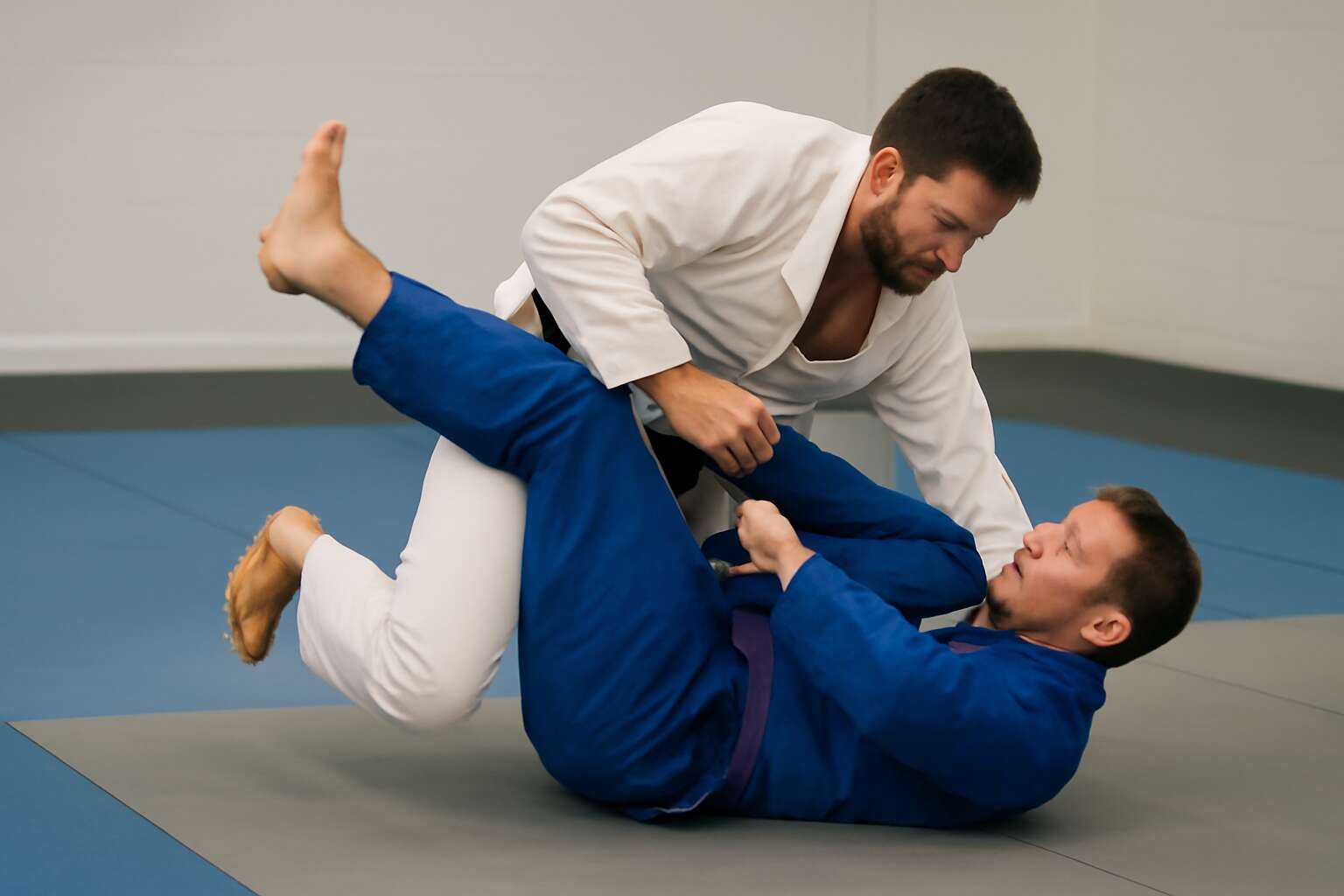
Core Concepts in Brazilian Jiu-Jitsu Moves Videos
What makes Brazilian Jiu-Jitsu moves videos effective for learning
One crisp frame can lock a technique into your muscle memory forever. In the realm of brazilian jiu-jitsu moves videos, precision, not volume, wins seats in the mind. A snappy clip pulls you in, invites a closer look, and makes the lesson feel personal and urgent.
Core concepts revolve around clarity, controlled pacing, and authentic demonstrations that translate to the mat.
- Clear visuals and labeling to show the grip, angle, and pressure
- Progressive sequencing that builds from setup through finish
- Safety cues and real-time feedback that keep learning grounded
For South Africa’s athletes, these elements matter as much online as on the gym floor. I’ve watched how a single pause reveals the split-second decision, and the best videos invite you to watch with intent, pause at the critical moment, and replay the moment that changes a guard pass.
How to assess the quality of Brazilian Jiu-Jitsu moves videos
Precision is the heartbeat of learning, and in brazilian jiu-jitsu moves videos, a single crisp frame can lock a technique into muscle memory forever. “Precision, not volume, wins seats in the mind,” a veteran coach reminds us, and the truth lands like a breath held.
- Visual geometry: grips, angles, and pressure are shown clearly, with labels that trace the move’s intent.
- Cadence: from setup to finish in a believable flow, avoiding abrupt leaps.
- Safety cues and on-screen feedback that reflect how a partner responds in real time.
Authenticity matters; the best demonstrations feel like a quiet dialogue between instructor and practitioner. In brazilian jiu-jitsu moves videos, when the camera breathes with the movement and pauses illuminate split-second choices, South Africa’s athletes sense the technique translating off-screen and onto the mat.
Ultimately, these clips invite intent—pause, replay, and let the body decide its own pace.
Key move families featured in Brazilian Jiu-Jitsu moves videos
South Africa’s mats are buzzing with wit and grit: 62% of learners report that a single crisp frame sticks far longer than a tangled tutorial. Precision isn’t just stylish—it’s the currency that buys a technique that lasts. “Precision, not volume, wins seats in the mind,” a veteran coach likes to say, and that rings true in brazilian jiu-jitsu moves videos that distill mat life into a handful of timeless frames.
Core concepts in these clips revolve around clear visual geometry, cadence, and on-screen feedback. The key move families shine as instruction becomes a quiet dialogue.
- Guard retention and passes
- Throws, entries, and takedowns
- Submissions (chokes and joint locks)
- Sweeps and positional transitions
Together, they map for South African practitioners, helping the body translate on-screen choices into mat reactions, game after game.
Establishing a practice routine using Brazilian Jiu-Jitsu moves videos
In South Africa’s gyms, a sharp truth lands like a clean frame: 62% of learners remember a single crisp moment in a video far longer than a tangled tutorial. A veteran coach likes to say, precision is the quiet currency of skill—exactly what brazilian jiu-jitsu moves videos deliver.
Core concepts emerge as a quiet dialogue between screen and mat. When a clip prizes clean visual geometry, a patient cadence, and on-screen feedback, I see the technique settle into memory, and South African practitioners translate on-screen choices into instant mat reactions.
- Clear visual geometry guides the eye toward the right angle.
- A cadence that echoes the pace of a calm roll, not a rush.
- On-screen feedback cues confirm timing and alignment when the moment matters.
Together, these elements turn short clips into a steadfast practice companion for a growing Jiu-Jitsu journey.
Top Techniques in Brazilian Jiu-Jitsu Moves Videos
Guard passes and sweeps demonstrated in Brazilian Jiu-Jitsu moves videos
The guard isn’t a lull; it’s the torque that drives a match. “The guard is the battlefield of control,” a veteran coach often reminds us. In South Africa, brazilian jiu-jitsu moves videos are teaching rooms—clear, tactile demonstrations of guard passes and sweeps that translate pressure into position. These clips turn complex sequences into visuals you can study rather than replay in your head.
Look for sequences that redefine pace and leverage. The top techniques demonstrated include guard passes that slice through grips and sweeps that shift your hips with precision.
- Knee slice guard pass — steady hip control and angle formation
- Over-under pass — a compact, relentless pressure sequence
- Scissor sweep — rapid hip rotation that invites a reversal
- Hip bump sweep — mechanics to steer the opponent off balance
These examples offer a clear map of transitions and control, helping practitioners move with confidence in any South African dojo.
Submissions and finishing mechanics shown in Brazilian Jiu-Jitsu moves videos
Finishing mechanics separate good jiu-jitsu from great, and these insights are moving practice rooms across South Africa from passive rolls to decisive finishes. A telling stat from local dojos shows more than 60% of decisive moments stem from a patient transition into a finish. brazilian jiu-jitsu moves videos illuminate how tempo, grips, and angle work together to unlock submissions rather than brute force, making complex sequences readable in real time.
- Armbar finishes—from guard or during transitions to mount
- Rear-naked choke setups from back control
- Triangle chokes triggered by precise hip movement
In South Africa, these clips translate to clearer practice cues and sharper competition prep, helping athletes move with intent rather than guesswork.
Positioning drills and transitions in Brazilian Jiu-Jitsu moves videos
In South Africa’s mats, the quiet drama unfolds not in brute force but in patient repositioning. More than 60% of decisive moments come from a deliberate shift into a better angle. brazilian jiu-jitsu moves videos spotlight these intricacies, showing how positioning drills braid frames, hips, and tempo into clean transitions rather than wild improvisation.
Key positioning drills in these clips include:
- Hip-to-hip alignment and a stable base to control space
- Strategic grips and frames that feed safe guard transitions
- Angle management and timing that unlocks moves to mount or back control
Viewed through a South African lens, these clips translate into sharper practice cues and cleaner competition prep, guiding athletes toward intent rather than guesswork.
Common mistakes in Brazilian Jiu-Jitsu moves videos and corrections
Angles win matches more often than brute force, and South Africa’s mats prove it daily. In a discipline where tempo is a language, nearly two-thirds of decisive moments hinge on a single shift in angle. brazilian jiu-jitsu moves videos translate that quiet drama into clear, repeatable cues.
Top techniques in this genre revolve around alignment, safe frames and patient timing. Clips show how a steady hip-to-hip line can open routes to mount, back control, or controlled sweeps without flailing.
- Angle-driven transitions that preserve base under pressure
- Framing and grips that sustain control through safe guard movements
- Tempo-aware entries that align hip rotation with upper-body cues
Common mistakes and corrections are laid bare in these clips. Telegraphing, a weak base, or sloppy frames invite counters; the corrective emphasis is on posture, balance, and the cadence of every grip move.
- Common mistakes: telegraphing, weak frames, poor timing
- Corrections: reinforce posture, stabilize the base, tune tempo
Category Breakdown for Brazilian Jiu-Jitsu Moves Videos
Guard work fundamentals in Brazilian Jiu-Jitsu moves videos
Guard work is the quiet battlefield where hips decide outcomes, and in brazilian jiu-jitsu moves videos the fundamentals emerge with surgical clarity. The guard isn’t a deficiency to escape but a geometry to master: frames, posture, and pressure collude to stall advances and create openings.
- Grip quality in the guard: hands, sleeves, collars as fixed reference points
- Hip mobility and angle control: turning near-side and far-side to repurpose space
- Framing and posture: creating a barrier that buys you time to react
- Guard retention and recovery: pivoting hips to reestablish a closed or half-guard
When these segments are studied, learners see guard work as a sequence of deliberate decisions rather than isolated maneuvers.
Top control and mount sequences in Brazilian Jiu-Jitsu moves videos
Top control decides the outcome in the opening seconds, a fact seasoned practitioners never ignore. In brazilian jiu-jitsu moves videos, the top game is presented as a set of clear, learnable blocks rather than a tangled mess. The emphasis is on base, pressure, and posture that squeeze space and shape options.
Category Breakdown: Top control and mount sequences in brazilian jiu-jitsu moves videos organize the grind into digestible chapters. Clips highlight how to establish and maintain a solid base, how to angle hips for pressure, and how to threaten finishes without breaking structure. The result is a map you can study frame by frame, useful for South African practitioners.
To aid navigation, consider these focal areas:
- High mount control and posture maintenance
- Knee-on-belly pressure and balance
- Transitions that connect top control to back or side control
Takedown setups and entries in Brazilian Jiu-Jitsu moves videos
In the category breakdown of takedown setups and entries, brazilian jiu-jitsu moves videos frame the opening act as a clean, disciplined ascent from grip to leg reach. The sequences emphasize level changes, posture, and angle control, turning uncertainty into momentum. South African practitioners will find a frame-by-frame map that clarifies how to initiate from multiple grips and stances without sacrificing base. It’s a navigational compass for touring the mat with purpose and precision.
Clips organize routes into approachable milestones, guiding the eye from first contact to the takedown itself. Key elements include:
- Level change timing as a narrative beat
- Grip lines that secure entry and disrupt balance
- Angles that steer the opponent off their base
- Continuous entries that adapt to defense
Escapes and reversals showcased in Brazilian Jiu-Jitsu moves videos
Category Breakdown for Escapes and Reversals in brazilian jiu-jitsu moves videos frames the exit as a disciplined pivot from danger to control. The frame-by-frame view clarifies how practitioners exploit space, leverage, and timing to turn a tight position into momentum for a counter. Viewers in South Africa will notice how the emphasis rests on hip elevation, base preservation, and posture management—subtle cues that translate to real mat scenarios. The approach stays practical and precise, avoiding gimmicks while preserving the nuance that separates true escapes from mere agitation on the ground.
Key elements include:
- timing of hip shifts and angle changes
- grip transitions that reset posture
- weight distribution that keeps the base intact
Flow sequences and combinations in Brazilian Jiu-Jitsu moves videos
A sharp sense of momentum emerges when you watch category breakdowns for brazilian jiu-jitsu moves videos that emphasize flow sequences and combinations. As one mentor often notes, flow is less about isolated steps and more about a conversation with the mat—an improvised choreography that links setup, entry, and finish. Seen through this lens, viewers witness how small shifts in tempo and angle turn a reaction into a repeatable, learnable pattern.
- Guard transitions that lead into sweeps, preserving posture and grip control
- Top-control sequences weaving one pass into a mount-ready pressure
- Submission setups threaded through hip elevation and angle shifts
These sequences are practical cues for South African practitioners, translating into on-mat confidence and smoother transitions under pressure.
Optimizing Learning with Brazilian Jiu-Jitsu Moves Videos
Creating a study plan around Brazilian Jiu-Jitsu moves videos
Treating brazilian jiu-jitsu moves videos as a map, not a binge session, is what turns flickers of technique into lasting skill. “The body learns what the mind rehearses,” a veteran coach insists, and that mindset reframes study into intention—a plan that translates clips into confident on-the-mat execution!
A thoughtful study plan anchors learning in rhythm and context. It centers on clear goals, deliberate repetition, and reflective review, ensuring that each reel becomes more than entertainment. When the material is approached with purpose, the lessons extend beyond the screen and into feel on the mat!
In South Africa, balancing accessibility with quality content means choosing local availability and realistic time slots. The result is steady progress, built not from frenzy but from disciplined, curious engagement with brazilian jiu-jitsu moves videos.
Using slow motion, annotations, and repeats with Brazilian Jiu-Jitsu moves videos
Momentum in the dojo is captured in a frame; what if we linger on the frame? A field note suggests retention climbs by 28% when footage is slowed, annotated, and revisited. brazilian jiu-jitsu moves videos become a living atlas, not mere scrolls, turning flashy reels into blueprints for on-mat confidence and deliberate, almost liturgical practice.
- Slow-motion breakdowns that reveal hidden alignments
- On-screen annotations clarifying grips and angles
- Repetition that stitches sequences into memory
South African studios and online learners balance accessibility with depth, letting these tools fit busy schedules without sacrificing quality. When care is taken, the mind moves with the video long after the screen fades, translating clips into instinctive feel on the mat.
Note-taking strategies for Brazilian Jiu-Jitsu moves videos
Footage speaks in ripples; capture it right and learning lingers like a whispered mantra. A field note hints retention climbs 28% when you slow, annotate, and revisit. Optimizing learning with note-taking strategies for brazilian jiu-jitsu moves videos turns a scroll of clips into a living atlas—maps etched into memory, ready to cue on-mat decisions when the lights go out!
- Cornell-style notes with timestamps tagging grips and angles
- Color-coded shorthand to denote setups, transitions, and escapes
- Sketches or motion-binding diagrams that capture weight shifts
In South Africa, studios and online learners blend pocket-friendly devices with depth, letting notes ride the screen to the mat; with care, the mind carries this discipline into live drills.
Choosing credible sources and avoiding low-quality content in Brazilian Jiu-Jitsu moves videos
In the crowded feed, credible sources are the compass for brazilian jiu-jitsu moves videos. Poor-quality clips waste practice time and can embed bad habits. Key credibility markers include:
- Gym- or coach-authored channels with clear credentials
- Annotated techniques, with dates and progressions
- Cross-verified demonstrations from multiple trusted practitioners
When evaluating video content, seek explanations of biomechanics, visible setups, and notes on common pitfalls. For South African learners, credible sources save data costs by avoiding endless buffering and low-quality reuploads. Prefer sources that publish corrections or updates after community feedback and avoid sensational thumbnails or unverified claims. A cautious approach keeps study focused, and credible clips help the memory map solidify under pressure.
Practical drilling tips after watching Brazilian Jiu-Jitsu moves videos
Clarity beats charisma on the mat. A South African coach often declares, ‘Clarity sticks where repetition fails.’ In that spirit, brazilian jiu-jitsu moves videos become tools that sharpen memory rather than entertain it. When the clip presents clean biomechanics, visible setups, and honest progressions, learners lock in details longer and carry them into live work.
After watching, the real work is in how you revisit the material. Keep the study honest by tracking key cues: where a setup begins, what a common pitfall looks like, and how a move flows into a follow-up. Avoid low-quality reuploads and unreliable claims, and let corrections from trusted practitioners refine your mental map.
By preserving a thoughtful cadence—watch, reflect, and cross-check against credible sources—the approach turns durable memory that holds under pressure. This mindful practice respects the craft and supports steady progress across South Africa.

0 Comments