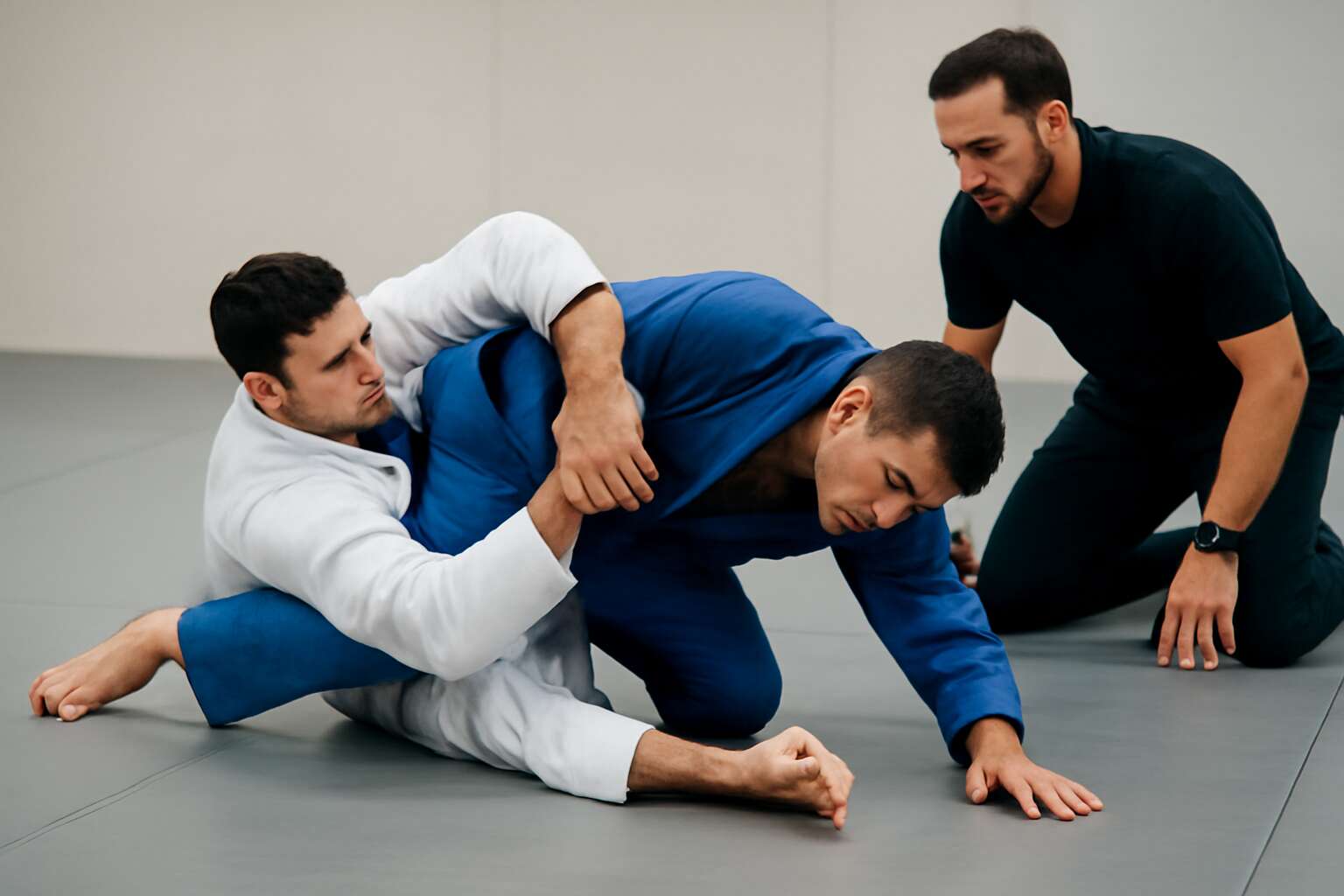
Understanding the fundamentals of Brazilian Jiu Jitsu competition rules
Match structure and timing
South African mats crackle with anticipation when the clock starts, and timing matters more than flash. Seven of ten judges believe timing often decides a bout more than flashy takedowns. I’ve learned that understanding the fundamentals of competition rules isn’t trivia; it’s a shared language between fighters, referees, and spectators. brazilian jiu jitsu rules can look labyrinthine, but they distill into fairness, consistency, and a dash of showmanship.
Match structure and timing shape every bout. Rounds vary, but rhythm stays recognizable: a bell, a scramble for position, and a reset before points or penalties. In South Africa, fans relish cadence and the referee’s steady pace.
- Start and finish signals
- Scoring for control and transitions
- Penalties when rules are breached
Ultimately, these rules provide a framework that keeps sport honest, spicy, and watchable. The clock and whistle cooperate to create clarity on the mat, even for newcomers in South African arena.
Rules overview and scoring basics
On South African mats, the rulebook acts like a compass in a sea of movement. A veteran Cape Town referee once quipped, “The rulebook isn’t a cage—it’s a map.” The clarity around competition rules helps fighters, referees, and spectators read the bout’s psychology.
Understanding brazilian jiu jitsu rules and scoring basics helps fans follow the action beyond flashy takedowns. Rules reward control and transitions, emphasize dominant positions, and use penalties to keep discipline—so the score tells a story of balance, not bravado.
- Takedowns and sweeps establish control
- Guard passes and mounts shift advantage
- Penalties reset or negate points
These basics keep South African arenas honest and the contest exciting, turning the clock and the whistle into a shared language on the mat.
Legal and illegal techniques
“The rulebook isn’t a cage—it’s a map,” a veteran Cape Town referee once said. Understanding the brazilian jiu jitsu rules clarifies how points arise from control, posture, and the safe application of submissions on South African mats, turning chaos into strategy and spectators into readers of the bout’s psychology.
Legal techniques center on steady pressure, positional dominance, and submissions aligned with safety. Illegal moves—strikes, eye gouges, spiking takedowns, or any action endangering the spine or neck—would derail the match and dim the story being told on the mat.
- Legal: controlled joint locks and chokes applied within published competition rules
- Illegal: punches, slams, eye gouges, or any tactic that risks serious injury
- Legal: guard passes and transitions that advance position without compromising safety
- Illegal: grabbing fingers, hair, or other actions that create unfair leverage
Equipment and uniform standards
On South African mats, rhythm and respect drive the contest as much as technique. Understanding the fundamentals of Brazilian Jiu Jitsu competition rules frames every exchange—where balance, posture, and the safe application of submissions count more than brute force. In this view, brazilian jiu jitsu rules guide the tempo and the ethics of the bout, keeping fighters within a shared language that spectators can read like a story unfolding across the mat.
Equipment and uniform standards matter as much as scoring sheets. They ensure consistency, safety, and readability for referees and fans alike. Here’s what typically governs attire and gear on South African circuits:
- Uniform options: gi for traditional competition or no-gi attire where permitted
- Belt display and rank insignia
- Protective wear: mouthguard, rash guard, or grappling shorts as required
- Patches, logos, and sponsor placements rules
- Hygiene and safety considerations—no metallic elements that can snag
A veteran referee often says, “The belt is the story thread; the gear is the texture.” With standards clear, the sport remains expressive rather than chaotic, letting the mat speak for itself.
Safety and officiating guidelines
“Safety isn’t optional; it’s the scoreboard of respect,” a veteran referee likes to say. On South African mats, I’ve watched spectators read the action like a well-timed story—tense, technical, and never chaotic. Understanding the fundamentals starts with the rules.
Under brazilian jiu jitsu rules, the emphasis is on safe technique and officiating clarity. The referee’s role is to balance tempo with safety, keeping exchanges constructive and readable for judges and fans alike. In short: control, posture, and the safe application of submissions rule the mat.
To lock the essentials in, consider these officiating touchpoints:
- Positioning matters
- Clear, calm communication
- Consistent stoppages
This framework keeps South African bouts legible and fair, letting technique surface instead of theatrics.
Scoring in Brazilian Jiu Jitsu competitions
Points for positions
Control writes the score on the mat—no fluff, just facts. In brazilian jiu jitsu rules, victory leans toward the competitor who seals dominant positions and pivots with precise transitions, not mere flurries of movement.
Scoring rewards two things: achieving and maintaining top positions, and showing continuous offense. Guard passes, mount, and back control shift the balance; sweeps and takedowns that lead to control count as well.
- Top position stability and control
- Smooth transitions that threaten submission
- Ongoing activity to keep the match alive
When time runs out or points are tight, judges look at advantages and penalties to decide the outcome. This approach keeps competition fair, fast, and fiercely competitive for South African crowds.
Advantage scoring and submission attempts
In the closing seconds of a bout, a single advantage can tilt the balance. Under brazilian jiu jitsu rules, judges weigh the quality of action as much as the points on the board.
Advantage scoring rewards moments that threaten control or near-submission attempts. It recognizes sustained activity that keeps the fight alive, even if a full point isn’t earned.
- Dominant, near-control actions that don’t meet a full point threshold
- Clear submission threats that stop short of finishing
- Nonstop pace that keeps the match in motion
- Repeated momentum shifts that captivate judges
When time expires or the score is tight, penalties tilt the balance, while advantages add nuance to the decision. This approach keeps competition fair and exhilarating for South African crowds.
Penalties and point deductions
South Africa’s mats hum with a fierce rhythm, and a striking stat lingers in the air: penalties influenced the outcome in about one in six national bouts last season. In the arena of brazilian jiu jitsu rules, judges weigh momentum, control, and intent as tightly as the clock winds down. A single deducted point or an earned advantage can tilt a close decision, preserving fairness while keeping the crowd on the edge of suspense.
Penalties and point deductions guide matches toward integrity. Common infringements include:
- Stalling or inactivity that stalls action
- Illegal grips or grips that threaten safety
- Leaving the mat or evading engagement to reset positions
- Unsportsmanlike conduct or dangerous techniques
Under brazilian jiu jitsu rules, the balance between punishment and reward preserves drama without tipping into chaos.
Time limits and overtime rules
On South Africa’s competition mats, every second feels like a coin flipping in the air. Last season, close bouts swung in the final sixty seconds—nearly 40% of decisive outcomes—proof that time can tilt fate. Within brazilian jiu jitsu rules, the clock choreographs momentum, rewarding both tempo and restraint.
Time limits give matches a clean arc. Most senior bouts run five to six minutes, with variations by age, belt, and federation. As the bell nears, officials curb stalling to preserve pace and clarity for judges and spectators alike.
- Overtime rules commonly introduce additional short periods to resolve ties, keeping the drama alive.
- Extra rounds often begin with positions that test strategy and endurance, preventing a single move from deciding the match.
- If a decision remains unresolved after overtime, judges’ deliberation or federation-specific tiebreakers determine the outcome.
Across every clash, time remains a primary force in shaping the narrative of competition.
Score clarification and common scoring mistakes
On the mat, scoring under brazilian jiu jitsu rules shapes every breath and decision. A clean point marks controlled advantage; an exchange can flip momentum in a heartbeat. The drama lives in the moment when control becomes quantifiable, and the crowd senses the tally in real time.
Score clarification rests on sustained control and credible transitions. Officials watch not just the move, but the moment it becomes decisive on the clock.
- Reading a near-position as points rather than a secure hold
- Misidentifying back control or a guard pass without full control
- Confusing advantages with points or missing penalties
- Overlooking clock cues that signal stalling or pause
Techniques and rule categories in Brazilian Jiu Jitsu
Allowed grips and positional control
“Control starts with the grip,” a veteran coach says, and the idea under brazilian jiu jitsu rules is simple: technique is organized into grips, transitions, and stable positions. The rule-set emphasizes how these elements interact to shape safe, strategic match flow, especially on the South African circuit.
Under brazilian jiu jitsu rules, the gi-based grip system centers on the uniform—lapels, sleeves, and pants—while maintaining safe contact. Positional control becomes the currency of the contest: establishing closed guard, advancing to mount or side control, or slipping to back control—each step bounded to protect athletes and maintain fair play in SA gyms and arenas.
Key positions define control:
- Closed guard
- Open guard
- Mount
- Side control
- Back control
These positions illustrate how grips translate into control, guiding compliance with the rule categories that govern allowable techniques.
Submissions and choke restrictions
Ringside lights flicker, and the mat carries the echo of breath and boot. A veteran coach whispers: technique writes the rhythm, and rules keep the tempo honest. Under brazilian jiu jitsu rules, submissions and choke restrictions choreograph danger into safety, turning raw ambition into a strategic waltz across the SA mats.
Chokes and armlocks are shaped within boundaries that protect the neck, airway, and spine. Legal submissions may target limbs and circuits of circulation, but techniques that threaten breathing or joint integrity are halted the moment risk appears. The tempo favors patient transitions—grips to guards to controlling positions—while staying inside the lines.
- Chokes that restrict blood flow without compromising the airway
- Limb locks applied with safety stoppage when danger signals arise
So, on South African mats, the stage is set by these rules, turning competition into a measured, almost mythic contest where courage partners with care.
Forbidden techniques for safety and sport integrity
South Africa’s competition floors pulse with a rhythm once the whistle cuts through air. brazilian jiu jitsu rules shape technique into a measured art, where every grip carries intent and every position tests balance, breath, and nerve. As one veteran coach puts it, ‘Patience is the sharpest weapon.’ I’ve watched coaches read the clock and turn ambition into tempo.
Techniques are categorized not by flair alone, but by safety-driven rule groups that safeguard both athlete and sport. The boundaries are visible in three core buckets:
- Neck, airway, and spine protections
- Joint integrity and controlled leverage
- Gripping limits and positional safety
On South African mats, the narrative remains suspenseful—calm, precise, and almost mythic as fighters navigate the line between control and risk. The crowd feels the tension as the clock ticks and a decision echoes through the arena, a quiet testament to how these rules keep competition honest.
Stalling rules and engagement expectations
On South African mats, technique becomes a measured dialogue with time. In brazilian jiu jitsu rules, stalling is the soft rust that tests will and whiskers the crowd into a breath-held moment; the whistle becomes a metronome, and grip and guard are poems about restraint. A veteran coach once quipped that patience is the sharpest weapon, and tempo here feels almost mythic.
Techniques sit inside three rule categories, with stalling rules sharpening the edge of engagement. The frame holds steady as the clock nudges. Here are engagement cues that keep the rhythm honest:
- Purposeful pace that prompts an immediate counter or reset
- Clarity of transitions that reveals intent rather than bravado
- Quiet dialogue with referees through actions, not chatter
That balance—control, risk, and respect—defines the sport on South African mats, where crowd, clock, and coach converge in a single, breath-held moment.
Reversals, transitions, and reset rules
On South African mats, a deft reversal can rewrite a match in seconds. In the world of brazilian jiu jitsu rules, reversals, transitions, and resets compose a single, breath-held rhythm that favors timing over brute force.
- Reversals: Quick hip pivots, framing, and underhook play flip the narrative and pressure the clock without conceding control.
- Transitions: Smooth hand-to-hand exchanges and positional shifts unlock sweeps and mount escapes with purposeful intent.
- Reset rules: When momentum stalls, disengage cleanly, reassess grips, and reestablish a safe, productive posture.
These elements sustain the drama on South African mats, as brazilian jiu jitsu rules continue to shape the tempo—control, risk, and respect intertwining in every scramble.
Penalty system and disqualification criteria
Common penalties and incidents
Penalties swing bouts faster than a lightning-fast guard pass. A single caution can tilt momentum and flip the scoreboard in moments. In brazilian jiu jitsu rules, officials police intent as closely as technique, and a referee’s whistle can end a rally with a single raised finger. I’ve watched matches pivot on a warning more often than a dramatic scissor sweep.
Common penalties and incidents to watch for include:
- Stalling or inactivity
- Illegal grips or manipulations
- Grabbing clothing, belt, or hair
- Unsportsmanlike conduct or taunting
- Slamming or dangerous throws
- Eye gouging or finger-in-eye contact
- Continuing after stoppage
Disqualification criteria are explicit: a single dangerous act, repeated fouls, or deliberate rule violations can end a match immediately. The stakes are high, and the whistle often serves as the finish line before the bell.
Warning hierarchy and penalty accumulation
Penalty systems in brazilian jiu jitsu rules are a study in precision and psychology. Officials police intent as closely as technique, and momentum can hinge on a solitary whistle. A single caution can swing the rhythm of a bout, while repeated infractions escalate to more serious consequences. The discipline rewards control and penalizes careless shortcuts, keeping the sport safe and competitive under South Africa’s standards and global norms.
Warning hierarchy and penalty accumulation shape every decision. Minor infractions earn cautions, subsequent breaches ripple through the scoring and the clock. Penalties accumulate across the match, nudging strategy and balance.
- Warning or caution for minor infractions
- Point deductions or time penalties that slow the attack
- Penalty accumulation across rounds
- Disqualification for a single dangerous act or repeated fouls
In brazilian jiu jitsu rules, disqualification criteria are explicit: a single dangerous act, repeated fouls, or deliberate rule violations can end a match immediately.
Disqualification scenarios and appeals
Penalty systems in brazilian jiu jitsu rules are a study in precision and psychology. Officials police intent as closely as technique, and a single caution or time penalty can tilt the match’s rhythm. The clock cooperates with discipline; repeated infractions slow momentum and sharpen consequences, preserving safety and fairness under South Africa’s standards and global norms.
- A solitary dangerous act can end the bout immediately; one act shapes the match’s fate.
- Persistent fouls or deliberate rule breaches escalate penalties and may halt the contest.
- A formal appeal process exists to review decisions under the sport’s governing rules.
Disqualification scenarios and appeals unfold with a steady cadence. A ruling can be challenged through a defined review, a neutral hearing, and a final decision, designed to protect athletes and preserve integrity within the brazilian jiu jitsu rules landscape in South Africa and beyond.



0 Comments