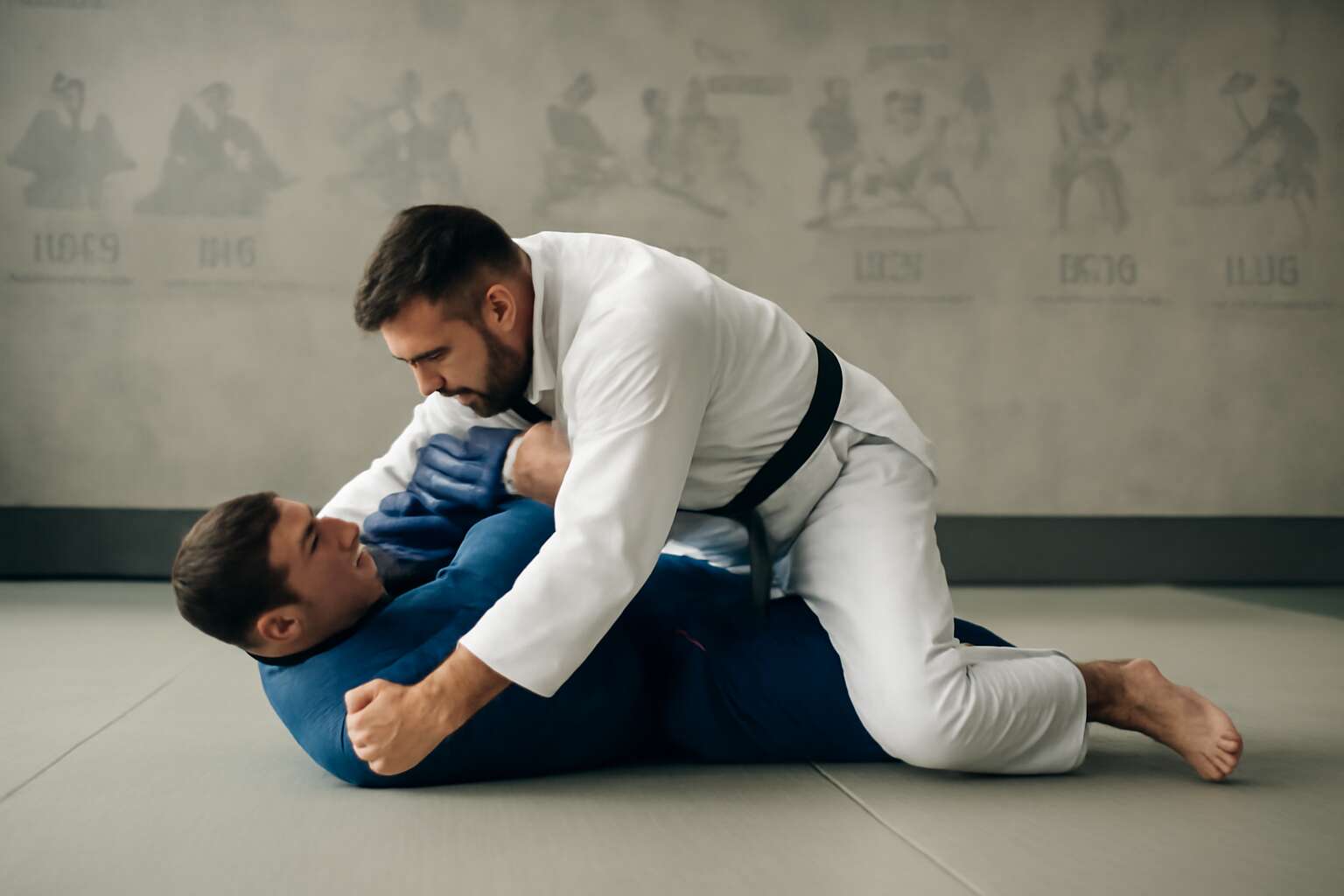
Origins and Influences of Brazilian Jiu-Jitsu
Predecessor martial arts and early influences
There are an estimated 3 million practitioners worldwide, and the punchline lands on mats: how was brazilian jiu jitsu made? The answer braids Japanese technique with Brazilian grit, a system built for tight spaces and relentless tempo.
Predecessor arts lit the fuse: traditional Japanese jiu-jitsu and Kano Jigoro’s judo provided structure; curious Brazilians tuned technique to leverage and pressure, turning scrambles into submissions—proof that patience sometimes pays off more than a punchline.
- Mitsuyo Maeda, the traveling judoka who brought grappling to Brazil
- Gracie family experimentation and a grappling-first philosophy
- Judo’s groundwork emphasis on leverage over brute strength
- Luta Livre and other Brazilian grappling experiments
From those roots, Brazilian jiu jitsu evolved as a ground-centric art that values position, timing, and patience—traits perfectly suited to South Africa’s diverse gyms and competition scene, where the lineage continues to adapt and teach under pressure.
The Gracie family’s pivotal role in shaping BJJ
Three million practitioners worldwide keep the art alive, and on South Africa’s mats that history travels from Rio’s rooms to Johannesburg’s halls, where every grip tells a story. The Gracie family’s pivotal role in shaping BJJ is a tale of restraint meeting ingenuity, where small frames bend space and time on the floor.
how was brazilian jiu jitsu made? It was forged through patient layering—grappling-first experimentation, refined leverage, and a relentless tempo that turned scrambles into submissions. The Gracies engineered a pathway from street grit to sport, preserving technique while embracing adaptation.
Key threads that still guide the practice today include:
- ground control as the engine of progression
- leverage over brute strength
- continuous refinement in compact spaces
In South Africa, the lineage informs coaches and competitors who value patience, position, and fluid transitions on every mat.
Key families and regional schools in Brazil
Beyond the Gracie shadow, origins bloom in regional schools and steadfast families. The curiosity “how was brazilian jiu jitsu made” has its roots in the workshop floors of Brazil, where patient grappling trials layered onto street grit and birthed a map from Rio’s rooms to wider mats.
- Oswaldo Fadda and a grassroots lineage that taught many outside the Gracie circle, shaping BJJ in Rio and beyond.
- The Machado brothers—Carlos, Rigan, Roger, and Jean Jacques—and their São Paulo–Rio networks that helped spread technique and competition.
- Regional hubs in Porto Alegre, Recife, and Belo Horizonte where city life fused street-smart grapplers with sport-minded technicians.
From these roots, South Africa’s coaches glean patience, position, and fluid transitions that echo on every mat.
Early demonstrations and the transition to a sport
From dusk-lit halls to sun-bleached streets, Brazilian jiu-jitsu began as a whisper of pressure and posture. Early demonstrations looked less like sport and more like weather carved into bodies—chokes that hummed and escapes that sang of survival. how was brazilian jiu jitsu made — not in laboratories, but on worn mats where patience bent will into leverage and a quiet community stitched technique through repetition.
From those mornings, technique crystallized as street grit met dojo discipline.
- grassroots adaptations on mixed mats
- soft joint manipulation evolving to sport grips
- tournament thinking shaping guard and passing drills
Today, South Africa’s gyms echo that evolution, translating sunlit persistence into a global discipline. I hear it when a coach lays a patient grip and the room goes still, then breathes out in victory. That dark, patient lineage breathes on every mat!
From Gracie Jiu-Jitsu to a Modern Martial Art in Brazil
Merging jiu-jitsu with sport competition
From Gracie Jiu-Jitsu to a modern martial art, the arc is a practical evolution. This answer—how was brazilian jiu jitsu made.—shaped coaching and competition, turning leverage into a sport that scales from hobbyist to high-level athlete. Millions train worldwide, drawn to a system that prizes technique over brute strength.
- Standardized rules and belt recognition helped the sport travel across regions
- Weight classes and scoring crafted a clear path for competitors
- Gyms adapted to group classes and open mats, fueling growth
Today the art continues to fuse tradition with competition, and here in South Africa, clubs blend local culture with this global sport. It remains practical and storytelling—grit, patience, and technique across generations.
Development of academies and teaching traditions
Today, there are more than 3 million practitioners of Brazilian Jiu-Jitsu worldwide, and the boom traces back to a network of academies that turned technique into a discipline. People often ask how was brazilian jiu jitsu made, and the answer sits in the rise of formal teaching within Brazilian streets and city gyms. Coaches codified curriculum, established belts, and built lifelong lineage so a student’s progress could be measured beyond bragging rights.
- Structured curriculums that map technique from white to black
- Certified instructors who maintain a clear lineage and standards
- Open-mat culture and seminars that spread knowledge beyond the walls
In South Africa, clubs borrow this framework but weave in local rhythm and stories, keeping the craft practical and inclusive.
Notable instructors and lineage branches
From Gracie Jiu-Jitsu to a modern martial art in Brazil, the story is a map of mentors, not merely moves. The question of how was brazilian jiu jitsu made becomes a study in lineage, with each coach translating street intuition into a teachable curriculum.
- Helio Gracie and the refinement of leverage and philosophy
- Carlson Gracie’s coaching dynasty and competition-first ethos
- Oswaldo Fadda’s independent lineage expanding access
- Renzo Gracie’s global teaching network and cross-border exchange
Across Brazil, these strands informed modern academies and the open-mat culture that now travels to South Africa’s clubs, where local rhythms cohere with international standards. The result is a living art, with lineage branches mapped, tracked, and passed on with care.
Rules and competition milestones in Brazil
From Gracie Jiu-Jitsu to a modern Brazilian sport, the mat shifted from private challenges to public, rule-governed competition. The question how was brazilian jiu jitsu made unfolds as a timeline of rules, judges, and evolving safety standards that rewarded control and technique over brute force. In Brazil, this evolution turned a family craft into a nationwide, then global, competitive art.
- Formalized scoring that prioritizes positions like guard passes and mount.
- National championships and regional circuits feeding into larger events.
- Standardized belts, divisions, and weight classes to ensure fair play.
- Open-mat culture evolving into cross-border exchanges and international clinics.
Across South Africa, these milestones echo in every academy, where Brazilian discipline meets local rhythm, creating a living, globally informed art on the mats!
Globalization and Evolution of Brazilian Jiu-Jitsu
Introduction to international expansion and the UFC era
Globalization pressed the mat into a global marketplace, and the ripple effects were immediate. By 2010, Brazilian jiu-jitsu had spread into more than 30 countries, weaving a shared language of grips and guard passes. This is the moment to ask: how was brazilian jiu jitsu made in the global arena?
With the UFC era and international expansion, a sport-turned-exhibition format provided a crucible for innovation. Royce Gracie’s early UFC run and rising viewership compressed decades of refinement into years, prompting gyms worldwide to adopt cross-training and evolving competition formats.
- International seminar circuits
- Affiliate and licensing programs
- Streaming media and translated coaching resources
- Cross-disciplinary training for MMA and sport jiu-jitsu
These accelerants rendered Brazilian jiu-jitsu a truly transcontinental practice, resonating with readers in South Africa and beyond.
Global belt system and teaching methodologies worldwide
More than 50 countries now host BJJ academies, and the mat reads like a living map. When we ask how was brazilian jiu jitsu made, we glimpse a braided loom of belts, mentors, and shared drills threaded through international seminars and licensing networks.
Across continents, a global belt system and teaching methodologies emerged, standardizing white-to-black progressions and turning the discipline into a language spoken by coaches and students alike. It thrives on streaming seminars, translated coaching resources, and cross-disciplinary training for MMA and sport jiu-jitsu.
- Affiliate networks and licensing programs
- Streaming coaching resources and translated materials
- Cross-disciplinary training for MMA and sport jiu-jitsu
I’ve watched South African gyms weave these methods into local culture, honoring lineage while embracing safety and modern pedagogy. The result is a vibrant, enduring canvas on which beginners become practitioners and communities find belonging.
Cross-training and the rise of hybrid martial arts
Across more than 60 countries, Brazilian Jiu-Jitsu mats pulse with cross-pollination, shaping a living dialogue between sport rigor and street-smart self-defense. how was brazilian jiu jitsu made? The answer traces global networks—license agreements, streaming seminars, and coaches translating technique into a universal language that travels fast across oceans.
Globalization infused BJJ with cross-training as a core ethos. Practitioners blend grips and guard work with wrestling stance, judo throws, and Muay Thai clinches, forging hybrids that work in mixed contexts—sport, self-defense, and MMA. The rise of licensing programs and translated coaching resources kept the standard consistent even as styles diversified.
- Cross-discipline training for MMA
- Sport jiu-jitsu and no-gi competition
- Hybrid martial arts ecosystems
In South Africa, this global current found a local rhythm—clubs pairing lineage with safety-first pedagogy while inviting innovation. The result is a colorful, enduring canvas where beginners become practitioners and communities find belonging.
Competition formats, rules, and safety standards globally
Across 60+ countries, BJJ mats pulse with tournaments that weave technique into policy. The question how was brazilian jiu jitsu made finds its answer not in one dojo but in a network of licenses, federations, and safety standards that travel the globe from Cape Town to Curitiba.
Competition formats evolved from gi points and judge-led rounds to hybrid models: no-gi, submission-only, and weight- and age-based brackets. Safety became a compass—mandatory medical staff, mandatory injury protocols, and standardized refereeing—so athletes feel legit on every mat, every time. South Africa mirrors this cadence, aligning local events with international expectations.
- Unified global rulebooks
- Structured safety protocols
- Accessible coaching and streaming resources
Influence on MMA and popular culture
Globalisation has rewritten the origin story of how was brazilian jiu jitsu made. Across 60+ countries, mats thrum with competitions and classrooms, and fans lock in via bite-sized clips and live streams. From Cape Town to Curitiba, the art travels through licenses, federations, and standardized coaching, turning a regional craft into a worldwide phenomenon that even coffee shop chat can’t ignore.
That globalization has left a tangible mark on MMA and pop culture, in three telltale ways:
- Styles cross-pertilize with wrestling, judo, and kickboxing in major events
- Streaming and media hype turn grappling into a spectator sport for all ages
- Gyms become lifestyle hubs, mixing gear, coaching, and community antics
In South Africa, this blend is visible in local academies that pair practical self-defense with sport competition, echoing the global trend while keeping SA flair.
Cultural Impact, Legacy, and Modern Practice
Champion athletes who popularized BJJ globally
Across continents, one sport rewired how communities train, compete, and define resilience. In South Africa, BJJ studios become safe spaces where discipline, craft, and curiosity collide. Reflecting on how was brazilian jiu jitsu made we see a tapestry woven from family dynasties, gym doors, and the global mats greeting us daily.
- Rickson Gracie
- Marcelo Garcia
- Buchecha (Marcus Almeida)
Legacy is a living archive; competition success, star athletes, and media exposure turned BJJ into a global dialect. The names—Rickson Gracie, Royce Gracie, Marcelo Garcia, Buchecha—became icons not just for techniques but for ethos: patience, strategy, humility under pressure.
Modern practice means global academies, evolving curricula, and hybrid training that respects tradition while welcoming new techniques. Gi or no-gi, lineage remains a passport, and coaches in Cape Town and beyond tailor teaching to real-world resilience, competition readiness, and personal growth.
Impact on fitness, self-defense, and personal development
Cultural Impact: So how was brazilian jiu jitsu made? It grew from family dynasties and neighborhood gyms, then spread to global mats greeting us daily. In South Africa, BJJ studios become safe spaces where discipline, craft, and curiosity collide.
Legacy: The Gracie lineages—Rickson Gracie, Marcelo Garcia, Buchecha—built a durable ethos of patience and strategy. In Cape Town and beyond, coaches honor that heritage while tailoring teaching to local realities, turning competition insight into everyday resilience.
Modern Practice Impact: Fitness, self-defense, and personal development converge in contemporary BJJ. Gi or no-gi, hybrid formats, and global curricula meet South African coaches who adapt to local needs, shaping real-world resilience and fuller lives.
- Enhanced fitness
- Practical self-defense
- Mental discipline
- Community belonging
Academy culture, community-building, and social initiatives
Across South Africa, the question of how was brazilian jiu jitsu made surfaces in gym talk. It began in family basements and neighborhood garages, then moved to city mats and beyond. In Cape Town studios, BJJ is more than technique—it’s a cultural space where discipline and curiosity meet daily. Vibrant stories live on mats.
Legacy in South Africa is carried by coaches who honor lineage while adapting teaching to local realities. Patience, strategy, and problem-solving anchor classrooms and clubrooms, turning competition insight into everyday resilience across beginners and seasoned practitioners.
- Academy culture rooted in discipline and daily craft
- Community-building through youth programs and mentoring
- Social initiatives that open doors for underrepresented groups
Modern practice in South Africa blends gi and no-gi, hybrids, and curricula that fit local communities. The academy becomes a hub for social cohesion as much as sport, turning spaces into engines of personal growth and collective impact.
Continued evolution: innovative techniques and modern variations
In Cape Town studios, BJJ is more than technique—it’s a cultural space where discipline, curiosity, and community thrive. The question of how was brazilian jiu jitsu made resonates in gym talk, tracing roots from family basements to bustling city mats.
Legacy sits in coaches who honor lineage while adapting teaching to South African realities. Patience, strategy, and problem-solving anchor classrooms, turning competition insight into everyday resilience across beginners and seasoned practitioners.
Modern practice continues its evolution with innovative techniques and variations—hybrid curricula, no-gi shifts, and sport-science–informed coaching. The academy remains a hub for social cohesion, turning spaces into engines of personal growth and collective impact.
- Hybrid gi and no-gi
- Regionally tailored curricula
- Community outreach and youth initiatives

0 Comments